LOADING...
Extra eyes –Why you should get a cctv camera for home
 (1 votes, average: 5.00 out of 5)
- June 16, 2026
- by Ezlo Admin
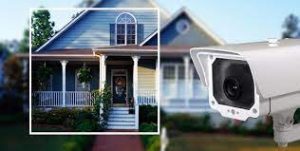
Security cameras have become like a third eye in places where you don’t spend all your time. The use of CCTV has substantially evolved over the last decade. Even so, they are still not part of everyone’s security system.
However, by using a CCTV camera, you are able to monitor the happening in your home remotely. When it comes to having a CCTV camera for home, the type you use depends on personal preference. A wired one will require more effort and setup though it is more reliable.
Wired security camera systems
When you have a wired CCTV camera for home, it means that your camera is able to transmit audio and video signals via a wire to the central hub. Once footage has been taken, it can either be sent from your home to a network or be left on the local hub for viewing at a later date. The network makes it possible for users to watch the video later or view it live.
Wired CCTV cameras also get electricity through hardwired cables, and the power could directly be from any power outlet. Alternatively, the power could be coming from wires connected to the power over Ethernet (PoE) cable.
The central hub can be found around or in the home in most wired CCTV cameras. It (the hub) can either be an NVR (network video recorder) system or a DVR (digital video recorder). The DVR is attached to a camera via a coaxial cable, whereas the NVR is used with IP (internet protocol) cameras.
Advantages
- Clear signals (both audio and video)
- Signals do not drop
- Power supply to cameras is constant
- It’s hard to get hacked
Disadvantages
- You cannot move with the system in the event you are changing houses.
- Wires need to be hidden, and this can be time-consuming and tiring.
- You will have to run wires on many different parts of the house
- The DVR jacks determine the number of cameras you can have
Wireless CCTV systems
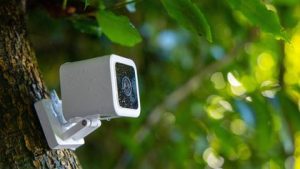
Wireless CCTV systems are those that are able to send footage to your home’s Wi-Fi from cameras in and around your home. This means that the CCTV footage is transmitted wirelessly.
Once the Wi-Fi has received a signal, the signal is taken to the cloud server. It is here that the footage can be viewed. The footage can either be viewed at a later time or in real-time. You will also see some wireless cameras having slots for Micro SD cards onboard. That way, some footage will be stored therein.
Unlike the wired CCTV camera for home, wire-free CCTV cameras are powered by batteries, thus having limited power. This power limitation is what makes them record when a signal has been detected. That is also one of the reasons why most of them now come with motion sensors.
Advantages
- Safe from an intruder who likes to cut wires
- It makes it easy to use many cameras
- It’s a mobile and flexible system
- Installation leaves a clean job
Disadvantages
- The signal range is limited
- The signal can be impeded by building elements like floors and walls etc.
- There is a possibility of interference with other systems that also use Wi-Fi
- There’s a high likelihood of experiencing digital snooping
- Wireless systems require battery changing
What to look for in a CCTV camera for home
Other than asking for help from a CCTV expert, it is wise that you consider the following questions before making your purchase:
- Does the security camera have an SD card slot or a DVR internal storage?
Storage type and capacity are essential, especially if you plan to use footage at a later date.
- Tilt or pan?
The rotation of a cctv camera for home determines the amount of space one camera can cover. Some cameras can tilt even 90 degrees and pun up 355 degrees. This all depends on your space and how much coverage you want.
- What’s the quality of the image given?
Getting a 720p x 1080p resolution assures you excellent image quality. Even so, it is worth noting that with better image quality comes high storage requirements. So, if your CCTV camera for home has a large storage DVR, a high-resolution CCTV cam will do.
- Are the motion and image sensors available?
While cameras with these features are costlier, they are the future of surveillance cameras.
Conclusion
While CCTVs were once only used in banks and business establishments, they have now found their way into our homes. Home security is now more critical than ever, and the easiest way to go about it is getting the right CCTV camera.