LOADING...
What you need to build a CCTV security camera system
 (1 votes, average: 5.00 out of 5)
- June 16, 2026
- by Ezlo Admin
It is important to note that there are two main closed-circuit television (CCTV) systems out there. The one you choose will be the deciding factor in the type of equipment you get.
The two systems are the Analog and IP CCTV security camera systems. The main difference is in how they transmit their signals and process them.
Main differences between the two CCTV security camera systems
- An analog CCTV security camera acts simply as an eye that collects visual data for later processing. The IP CCTV camera on the other hand is able to capture and process the signal within the camera itself. It is not necessary to have an outside processing module unless otherwise stated by the manufacturer.
- An analog system must make use of a Digital video recorder (DVR) which acts as the main processing unit of the analog system. It converts the analog system to digital and stores the video on a local storage device.
A Network video camera (NVR) is used in IP CCTV cameras. It takes the digitally encoded data from the cameras, stores it, and makes it available for remote viewing. It can therefore be summarized as a wired or wireless CCTV security camera system with remote viewing capabilities.
- An NVR system can be either wired or wireless while the DVR-based system is always wired. Coaxial cable is used in analog CCTV security cameras while a Cat6 or Cat5 cable is used in IP CCTV security camera systems.
- An IP camera system utilizing an NVR can support up to 128 cameras. Its analog counterpart on a single DVR can only support up to 32 cameras all of which must be wired to the Digital video recorder.
Overview of the main components of a CCTV security camera system
There are five main types of equipment required and each comes with different considerations to account for. These include:
CCTV security cameras
A good place to start is the cameras. These are an integral part of your system since what they are able to record dictates what you will be able to see. There are many types of cameras in the market.
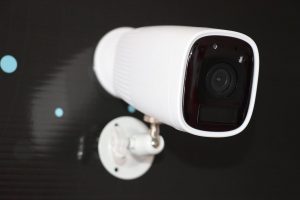
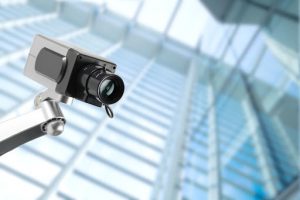
These include dome, bullet type, C mount, day/night, infrared, varifocal, just to name a few. The type you choose will depend on factors that include:
- How much area should the camera cover? A large area requires powerful cameras such as the PTZ type.
- Indoors or outdoors? If outdoors, then shop for rugged cameras that can handle harsh conditions.
- Discretion. Dome cameras are discreet and not as easily recognized as bullet-type cameras.
- Scalability. If you think you’ll be adding on new cameras in the future, the wireless cameras are a better choice as they’ll involve less hassle and cost to install.
Other considerations include video quality which will inform on the size of storage required.
Storage
A high-resolution image will require more storage. Home security camera systems require less storage than CCTV security cameras for businesses. The recommended storage is 60GB – 240GB per camera installed though this can vary widely depending on your needs and system specifications.
Factors affecting storage requirements include resolution, field of view, frame rate, and motion detection features. The higher the value of any of these is the more storage you require.
Video recorders and Cabling
This refers to the aforementioned Digital video recorders and Network video recorders whose main role is to store the data from the cameras. Furthermore, both analog and IP CCTV security cameras require different cables as stated above.
Monitors
This is largely dependent on the customer and can range from something as simple as a smartphone to a series of wall-to-wall monitors. The monitor you choose should however be compatible with the CCTV camera that you use. It would be unintuitive to record with a high-quality resolution camera only to watch the feed from a lower resolution monitor.
CCTV system management and video analytics
The software through which you view your footage should be user-friendly. Storing and reviewing footage should be easy. The best software out there also enables you to automate video surveillance with features such as motion detection and facial recognition.
Cost Estimation of a complete CCTV security camera system
For home security camera solutions, the analog option carries the benefits of being cheaper and easier to install. This is despite all the cabling required.
Commercial CCTV security camera systems will find IP CCTV systems more suitable because of easier scalability, remote access, wider coverage, and superior video analytical capabilities at higher resolutions.