LOADING...
Privacy laws and what they mean for the small CCTV camera Pr
 (1 votes, average: 5.00 out of 5)
- June 22, 2026
- by Ezlo Admin
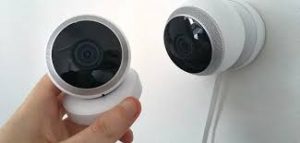
There was a time when spy cam strictly meant a nifty little gadget that a real espionage agent would carry along in missions to capture photos of secret documents. Well not anymore. We are all well-equipped potential spies now, all of us carry tiny cameras in our pockets all the time.
Ours is an age of surveillance where someone could surreptitiously station a small CCTV camera in your home and watch you all day. Everybody is watching and privacy is a relic. The number of gadgets that could be spying on you is ever-increasing and the government plays a huge role in it.
For example, in the US alone, an estimated 30 million surveillance cameras record 4 billion hours of video every week. This of course seems paltry when compared to the 200 million surveillance cameras in China but it is nonetheless disconcerting. The moment you step out into the street, assume you are being watched as that is likely to be the case.
But what about your neighbor, your coworker, or even your spouse. Could they also be watching you?
The legality of a small CCTV camera
While most countries allow filming in public, the laws surrounding secretive filming commonly revolve around the question of whether the individual being recorded has a reasonable expectation of privacy.
A reasonable expectation of privacy is meant to protect people in areas that are generally considered to be private. This includes places such as bathrooms, bedrooms, locker rooms, and hotel rooms where filming would constitute a breach of privacy.
Though to be certain, one should always check on the specific laws in the state or country they wish to film in.
Audio recordings on the other hand are different. For example, federal laws generally allow the recording of a conversation if at least one of the parties in the conversation is aware and has consented to the recording. This largely affects phone call recordings and home/office video/audio recordings.
Small CCTV cameras on the market today
When speaking of small CCTV cameras, this is not just limited to covert spy cameras. Other very small CCTV cameras exist that are not made for spying. For many of these, their miniature/compact size is simply a function of the job they’ll be performing – cases where being bulky would hinder performance in some way. The common ones include:
Spy cameras/hidden cameras provide a strong tag
These small CCTV cameras are built to blend into their surroundings and be as inconspicuous as possible. As such they are normally incorporated into everyday devices such as bulbs, eyeglasses, and air fresheners. Factors to consider include:
- Resolution – a 720p resolution will usually suffice because most spy activities do not necessarily need a high resolution.
- Battery life and storage – If the camera is a standalone small CCTV camera, this will be a big issue. The best-hidden camera out there is capable of capturing 36 hours of footage or waiting for as long as 270 days to capture footage.
Nanny cams
Are small CCTV cameras designed to give parents peace of mind when they leave their child in the care of a nanny or when the child is alone, or perhaps sleeping. Important Features to take note of are:
- Two-way talk – built-in microphones and speakers that allow you to speak to and hear your child. Or communicate with the nanny.
- Wi-Fi connectivity – allows you to monitor your child from miles away. Most nanny cams are mobile compatible so you can watch the feed on your phone.
- Motion capture – alerts you when there’s movement so you do not have to constantly watch the video feed.
- Viewing angle – a wide viewing angle is best coupled with a pan-tilt function
- Power source – connecting to an outlet is optimal as it gives you an uninterrupted 24/7 feed
- Pet cameras will have the same considerations as nanny cams although some come with optional additional features such as bark sensors and treat dispensers.
Helmet cameras/Police body cameras/Action cameras
Designed with movement in mind, these small CCTV cameras need to be both compact and user-friendly such that they do not interfere with the job the wearer is performing. They are frequently used by outdoor adventurers and law enforcement. Factors to consider include:
- Durability – They need to handle exposure to the elements so it is important to have a waterproof IP65 rating as well as a MIL-STD 810G rating for shock and drop resistance.
- Long battery life – The wearers will frequently be far from power outlets and therefore these need to last as long as possible. 1000mAh – 3000mAH are the standard battery packs available – a good size is one rated for at least about 8 hours.
- Resolution – Especially with outdoor adventurers and sports enthusiasts, these need to be of high resolution because these individuals like to edit and share their footage. 1080p at 30fps is the standard resolution and a good place to start.
Privacy laws and how they pertain to small CCTV cameras
Most small CCTV cameras are used with good intent. Even when not, the right to a reasonable expectation of privacy and one-party consent does offer a reasonable safeguard against intrusive filming.